Rome vs Florence vs Venice, Which Italian City Needs the Most Data
Destination eSIM · · 10 min read · By AirCarta Team
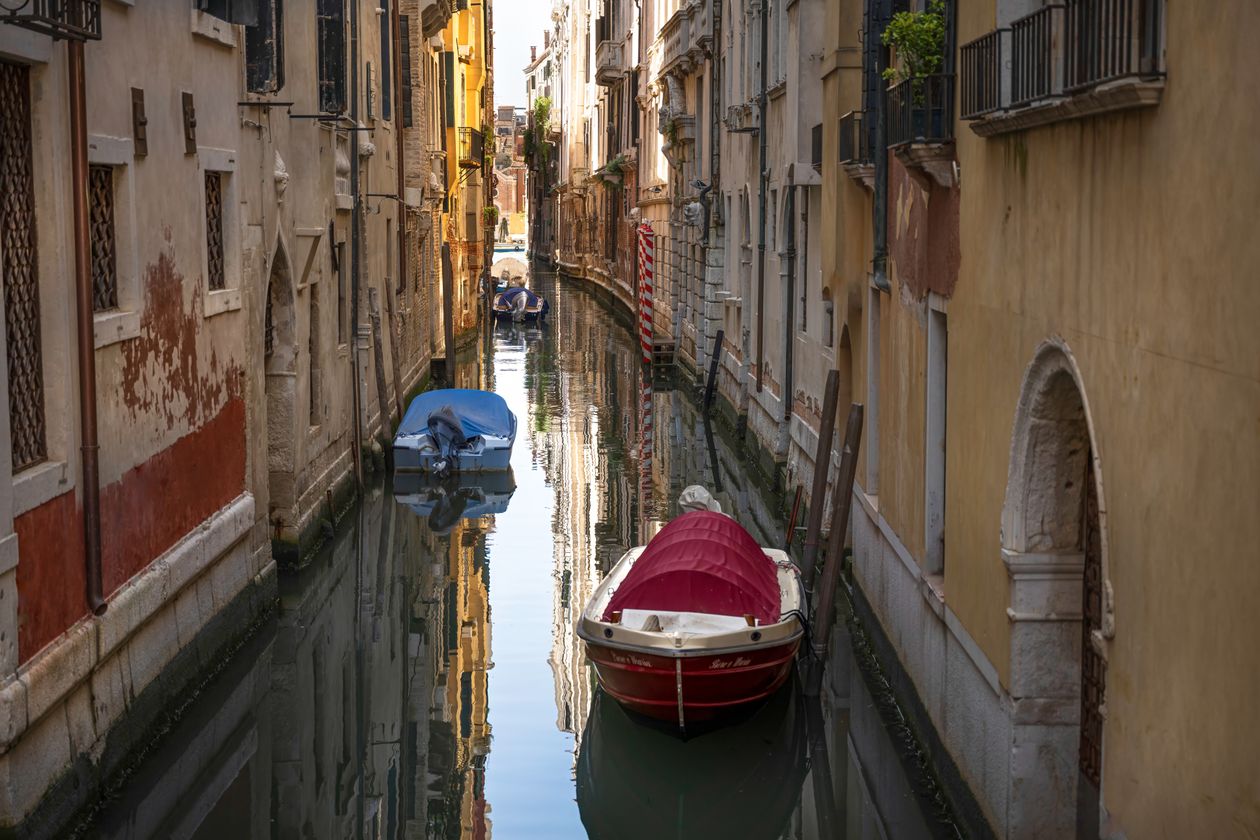
Italy has ranked as the destination that leaves American travelers happiest in 2026, and the classic Rome, Florence, Venice route remains the single most common first-timer itinerary. What doesn't get discussed much is that these three cities don't actually use data the same way, and knowing why can save you from either running short or overpaying for data you never needed.
Quick answer: Rome uses the most data overall, simply because it's the biggest and most spread-out of the three. Venice uses data more constantly relative to its size, since its maze of alleys makes GPS navigation a near-constant necessity despite the city being tiny. Florence is the lightest user of the three, compact enough to largely explore without staring at a map.
Why Rome Uses the Most, Even Though It Feels Obvious
Rome is simply bigger. Between the historic center, Trastevere, the Vatican, and Termini, distances that look short on a map take real time to walk, and most visitors end up supplementing with the metro or rideshares, both of which need a live connection to book or navigate. Rome is also the city with the most audio guides, timed-entry ticket QR codes, and translation-heavy interactions at the Colosseum, the Forum, and the Vatican Museums, which adds up over a multi-day stay. One consistent local quirk: the underground Metro lines A and B have patchy signal regardless of which network you're on, so plan to have your next step figured out before you go underground rather than mid-transit.
Why Venice Is Deceptively Data-Hungry
Venice is tiny by comparison, and that's exactly the trap. Its maze of narrow calli doesn't follow any grid logic, street numbering resets by sestiere rather than running sequentially, and it's genuinely easy to lose your bearings within a few turns. The result is that visitors check their maps far more often per hour than they would in a larger, more logically laid-out city. Coverage itself is reliable across the main sestieri and on the vaporetto water buses, and it holds up well on Murano, Burano, and Torcello too. The exceptions are brief and specific: expect short drops inside St Mark's Basilica and in the narrowest, most enclosed calli, where dense stone construction blocks signal briefly before it picks back up a few steps later.
Why Florence Is the Lightest User
Florence rewards a different travel style. The historic center, the Uffizi, the Duomo, and Ponte Vecchio all sit within a genuinely walkable core, and once you've got your bearings on day one, a lot of visitors barely open a map again until they leave the center. Coverage across the city itself is strong and consistent from every major network. Where data use picks up is on day trips into the surrounding countryside, Chianti, Siena, San Gimignano, and Pisa are common add-ons, and signal there thins out in the hills, with one specific network holding up more consistently than the others on those rural roads.
The Three Cities Side by Side
| City | Data Profile | Coverage Note |
|---|---|---|
| Rome | Highest overall, spread-out sites, audio guides, QR tickets | Strong above ground, Metro lines A and B patchy on any carrier |
| Venice | Frequent short checks, small area but easy to lose bearings | Reliable across sestieri, brief drops in dense calli and St Mark's Basilica |
| Florence | Lightest in the center, heavier only on countryside day trips | Strong throughout the historic core, thins in the Chianti hills |
Planning the Classic Combined Trip
Most first-time visitors run this exact route in one direction or the other, typically 3 to 4 days in Rome, 2 to 3 in Florence with a countryside day trip, and 2 to 3 in Venice, for a total of around 8 to 10 days. Rather than buying separate small plans for each city, it's simpler and usually cheaper to install one Italy eSIM before you fly and let it cover the whole route, since all three cities sit on the same national networks anyway. Budget on the higher end if a Tuscan countryside day trip is on the itinerary, since that's the single biggest data-use spike outside the cities themselves.
The Network Reality Across All Three
Italy runs on four networks travelers should know: TIM, Vodafone, WindTre, and Iliad. In the three cities themselves, the difference between the major carriers is genuinely small, all perform well in Rome's historic center, Florence's center and the Uffizi area, and Venice's main sestieri and vaporetto routes. The gap widens outside the cities: TIM has the most consistent reputation for holding up on rural roads and in the hills around Tuscany, while WindTre and Vodafone lead on raw 5G speed and availability inside the cities themselves. For a trip that mixes all three cities plus countryside day trips, a network with strong reach beyond city centers matters more than whichever one wins a peak-speed test in downtown Rome.
There's one more thing worth knowing before you land: Italy's Pisanu Law requires passport registration in person for every physical prepaid SIM, the same rule applies at TIM, Vodafone, WindTre, and Iliad stores alike. A travel eSIM roams onto Italian networks through a roaming agreement instead, which skips that in-store registration step entirely, so you're connected the moment you land rather than after a stop at a phone shop first.

Instant delivery, no passport registration needed
Connected the moment you land in Rome, Florence, or Venice
What Travelers Say
"Got turned around in Venice within ten minutes of leaving our hotel. Having maps working the whole time saved the trip."
- Kelly, USA, June 2026
"Set it up before we landed in Rome, never had to think about it again across all three cities."
- Marcus, USA, May 2026
Frequently Asked Questions
Which Italian city actually uses the most data?
Rome, simply due to its size and the number of distinct sites spread across a larger area, plus the audio guides and QR ticketing common at major attractions.Why does Venice feel like it needs constant data if it's so small?
Venice's narrow, non-grid street layout makes it easy to lose your bearings within a few turns, so visitors check maps far more often per hour than in a larger, more logically arranged city.Is Florence really the easiest of the three to navigate without much data?
Yes, for the historic center itself. The main sights sit within a compact, walkable core. Data use picks up mainly on day trips into the Tuscan countryside.Do I need a passport to buy a SIM card in Italy?
Yes, for a physical SIM. Italy's Pisanu Law requires in-person passport registration at TIM, Vodafone, WindTre, and Iliad stores alike. An eSIM roams onto Italian networks without that in-store step.Which network is best for a Rome, Florence, and Venice trip with countryside day trips?
All major networks perform similarly well within the three cities themselves. TIM has the more consistent reputation for holding up on rural roads and in the Tuscan hills if your trip extends beyond the cities.Does my phone work inside the Vatican Museums or St Mark's Basilica?
Generally yes, though brief signal dips inside thick stone structures like these are common regardless of carrier, and typically resolve within a few steps.Should I buy one eSIM for all three cities or separate plans for each?
One Italy eSIM covering the whole trip is simpler and usually cheaper than buying separately for each city, since Rome, Florence, and Venice all sit on the same national networks.How long does the classic Rome, Florence, Venice trip usually take?
Most first-time visitors spend around 8 to 10 days total, roughly 3 to 4 in Rome, 2 to 3 in Florence, and 2 to 3 in Venice.Final Thoughts
The Rome, Florence, Venice route rewards planning your data needs by city rather than assuming one number covers all three. Rome's size means the most overall usage, Venice's maze means the most frequent checking despite being the smallest city, and Florence lets you put the phone away more than the other two, at least until you head for the hills.
Get your AirCarta Italy eSIM → Instant delivery, no passport registration, money-back guarantee.