Route 66 Turns 100 in 2026, the eSIM Guide for America's Most Legendary Road Trip
Destination eSIM · · 10 min read · By AirCarta Team
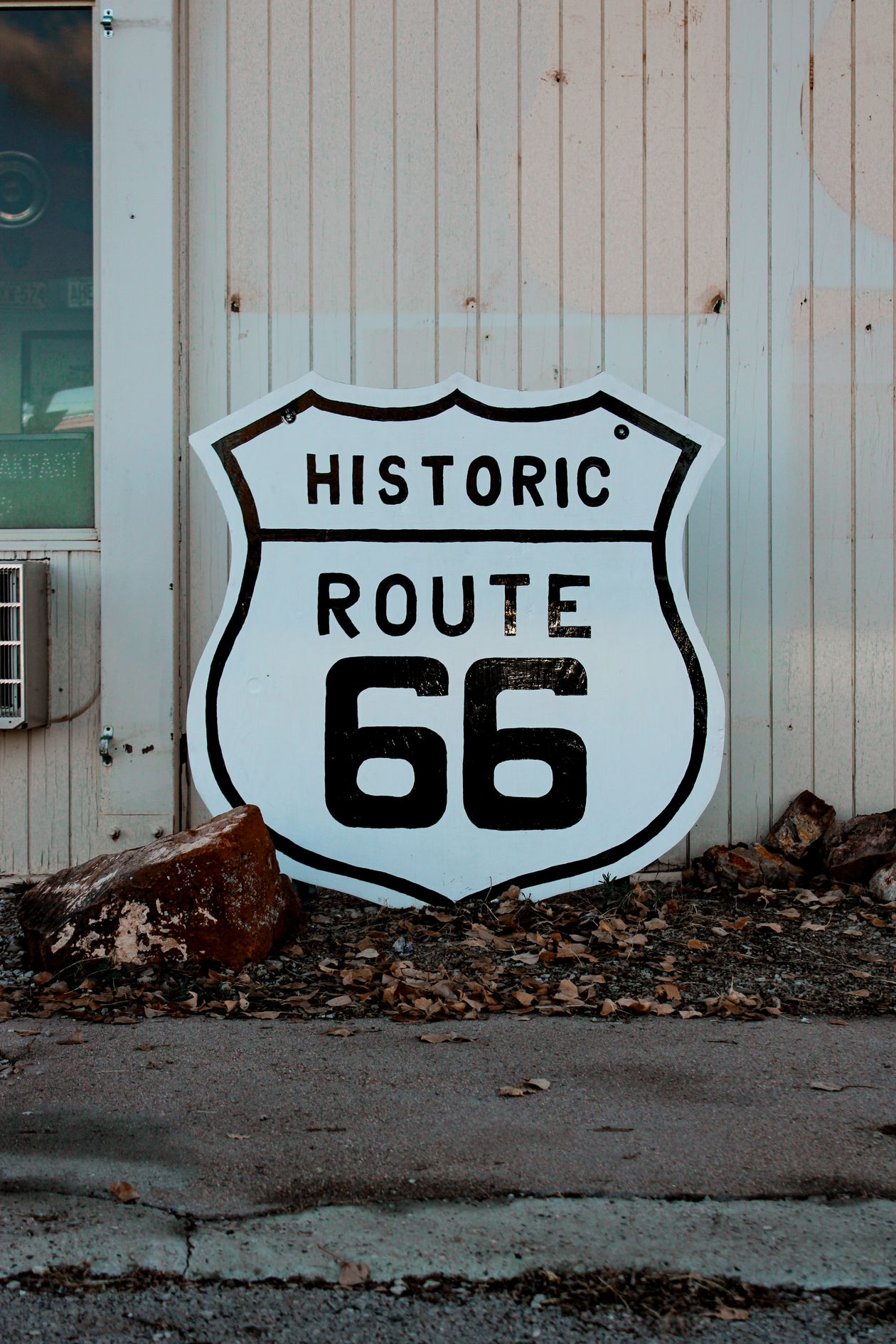
Route 66 was established on November 11, 1926, which makes 2026 its 100th anniversary, and the timing couldn't be better for road trippers. It lands the same year as America250, the nationwide celebration of the country's semiquincentennial, and travel data is already showing a real bump in RV bookings and road trip interest tied to both milestones together.
Quick answer: cell coverage across Route 66 is genuinely uneven, no single US carrier dominates all 2,448 miles and 8 states equally. An eSIM built on more than one network handles this far better than betting on a single carrier, and the difference matters most in the desert stretches through New Mexico, Arizona, and California.
Why 2026 Is the Year to Actually Do This Trip
Two anniversaries are converging on the same stretch of asphalt this year. Route 66's centennial is drawing dedicated attention to the towns and diners along its length, while America250's broader celebration of the Declaration of Independence's 250th anniversary is filling the calendar with festivals, museum exhibitions, and fireworks in cities and small towns nationwide. Industry data is already tracking the effect: RV rental and road trip interest has picked up noticeably in 2026, with both milestones cited as direct drivers.
The 8 States, and What Actually Changes
Route 66 runs from Chicago, Illinois to Santa Monica, California, crossing Missouri, Kansas, Oklahoma, Texas, New Mexico, and Arizona along the way. The first half, Illinois through Texas, is mostly small towns and farmland with generally solid coverage near the highway. The back half of the trip, New Mexico, Arizona, and the Mojave stretch into California, is where things actually get remote, wide desert basins with long gaps between towns, and coverage that depends heavily on which carrier you're using.
The Honest Network Reality
The United States runs on three nationwide networks: Verizon, AT&T, and T-Mobile. Historically, Verizon has the reputation for the widest rural footprint and is the network most travelers associate with having signal "in the middle of nowhere." But that's not the whole picture anymore. In New Mexico specifically, independent coverage data now shows T-Mobile's 5G network covering more of the state than either competitor, a genuine shift from the old rural-coverage assumptions.
The practical takeaway: no single carrier is the clear winner across all 8 states. Coverage leadership swaps by state and by terrain, plains versus desert versus mountain pass. That's exactly why an eSIM running on more than one major network is the safer bet for a trip this long, rather than locking into whichever carrier happened to work well on your last US trip to a different region.
AirCarta's USA eSIM
AirCarta's United States plans run on both T-Mobile and Verizon, which covers the two carriers most relevant to this exact situation, T-Mobile's strong and expanding 5G footprint in states like New Mexico, and Verizon's long-standing rural reliability elsewhere along the route.
| Data | Validity | Price |
|---|---|---|
| 1 GB | 7 days | $4.50 |
| 3 GB | 15 days | $7.50 |
| 5 GB | 30 days | $11.50 |
| 10 GB | 30 days | $19.50 |
| 15 GB | 30 days | $21.00 |
| 20 GB | 30 days | $31.00 |
| 50 GB | 30 days | $56.00 |
A full Route 66 crossing typically takes 10 to 14 days at a relaxed pace, which fits comfortably into the 10GB or 15GB tier for maps, photos, and messaging.
Iconic Stops Worth Building Your Route Around
Route 66 isn't just a highway, it's a string of roadside landmarks that have survived a century of interstate bypasses. A few worth planning around: the Gateway Arch in St. Louis, Missouri, marking the start of the westward stretch; Cadillac Ranch outside Amarillo, Texas, a row of half-buried vintage cars covered in decades of spray paint; the Wigwam Motel in Holbrook, Arizona, where you can actually sleep in a concrete teepee; and the Santa Monica Pier in California, the road's official western terminus. Between these stops are hundreds of small-town diners, motels, and murals that the centennial is putting back in the spotlight.
What America250 Adds to the Trip
Beyond Route 66 itself, America250 is layering historical reenactments, museum exhibitions, and fireworks displays into towns along and near the route throughout the year. Checking local event calendars for the towns on your itinerary before you go is worth the five minutes, since a stop that's ordinarily quiet might have a genuinely worthwhile festival happening the week you pass through.
Before You Leave the Last Big Town
A few habits matter more on Route 66 than on a typical city trip: download offline maps for each state segment before you lose signal in the gaps between towns, save your motel and diner addresses ahead of time rather than relying on live search, and don't assume the next town has the same coverage as the last one, terrain changes fast heading into the Southwest.

T-Mobile + Verizon, from $4.50
Two networks, so one weak spot doesn't end your trip
What Road Trippers Say
"Lost signal on my old carrier somewhere past Gallup, New Mexico last time. Set up AirCarta before this trip and had signal through most of the stretch."
- Hannah, UK, June 2026
"Did the whole Chicago to Santa Monica drive for the centennial. Set it up before we flew in, never touched it again."
- Lars, Germany, May 2026
Frequently Asked Questions
Is cell coverage bad on Route 66?
Not uniformly bad, but genuinely uneven. Illinois through Texas is generally well covered near the highway. New Mexico, Arizona, and the Mojave stretch into California have real gaps, varying by which carrier you're on.Which carrier is best for Route 66?
There isn't one clear winner across all 8 states. T-Mobile has strong, growing 5G coverage in states like New Mexico, while Verizon has a longer track record in remote rural stretches elsewhere. That's why a dual-network eSIM covers more ground than betting on a single carrier.How long does the full Route 66 trip take?
Most travelers cover it in 10 to 14 days at a relaxed pace, though it can be done faster or extended into a multi-week trip with detours.How much data do I need for the full route?
10GB to 15GB comfortably covers navigation, photos, and messaging for a 10 to 14 day crossing.Is 2026 actually a bigger year for this trip than usual?
Yes. Route 66's centennial and the America250 celebrations are landing in the same year, and travel industry data shows a real uptick in road trip and RV interest tied to both.Do I need an eSIM if my US phone already has service?
No, this guide is aimed at international visitors without a US carrier plan. If you already have US cellular service, you're covered.What are the must-see stops along the route?
The Gateway Arch in St. Louis, Cadillac Ranch near Amarillo, the Wigwam Motel in Holbrook, Arizona, and the Santa Monica Pier as the western terminus are among the most iconic, alongside countless small-town diners and murals.Are there special events because of America250?
Yes, many towns along and near Route 66 are hosting historical reenactments, museum exhibitions, and fireworks throughout 2026 as part of the broader America250 celebrations, worth checking local calendars before you pass through.Final Thoughts
A hundred years after it was first signed into existence, Route 66 is having a real moment, and the smartest way to experience it is still the simplest: know that the network reality shifts state by state, set up connectivity that covers more than one carrier, and let the desert stretches be about the scenery, not a dead phone.
Get your AirCarta USA eSIM → T-Mobile and Verizon, instant delivery, money-back guarantee.